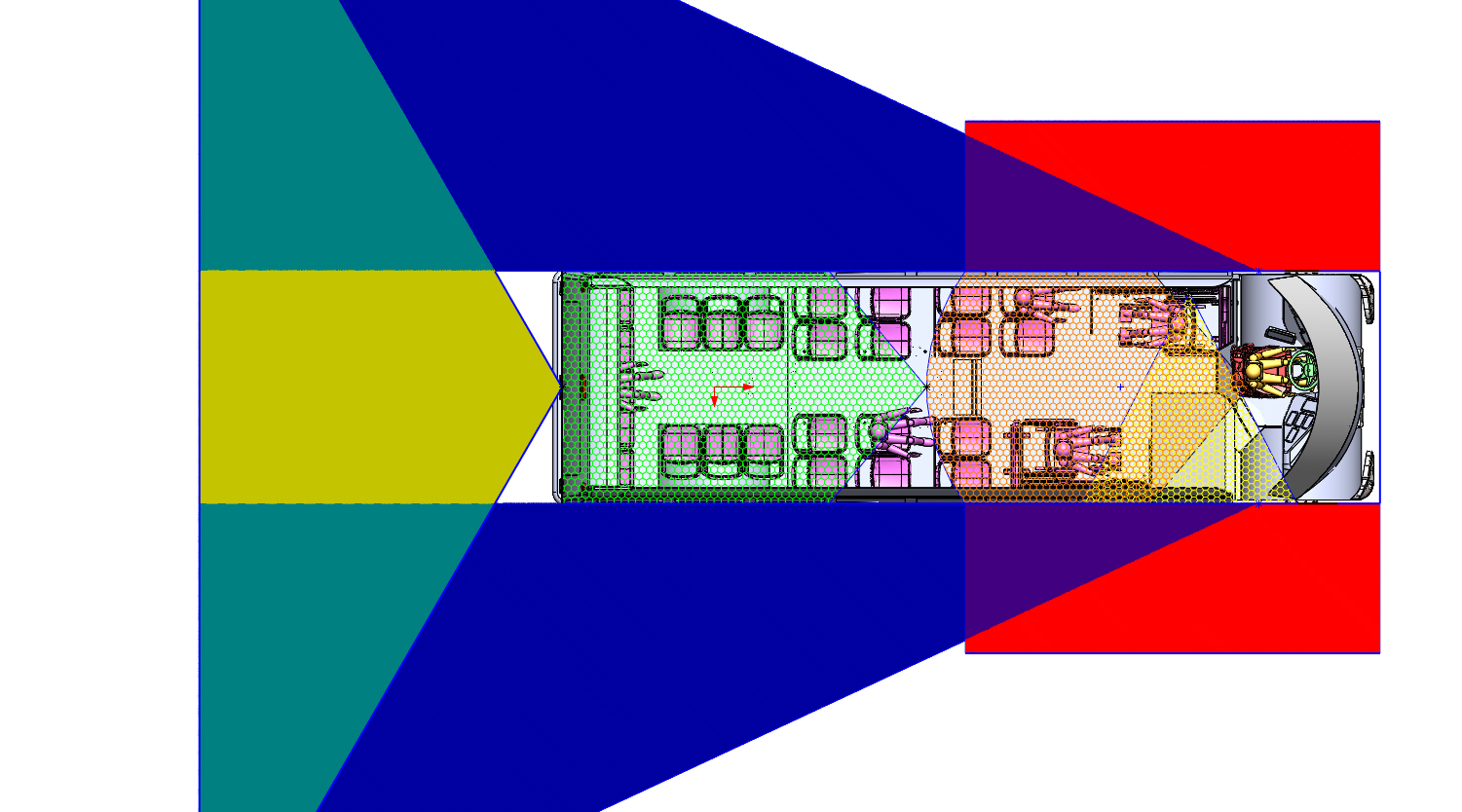
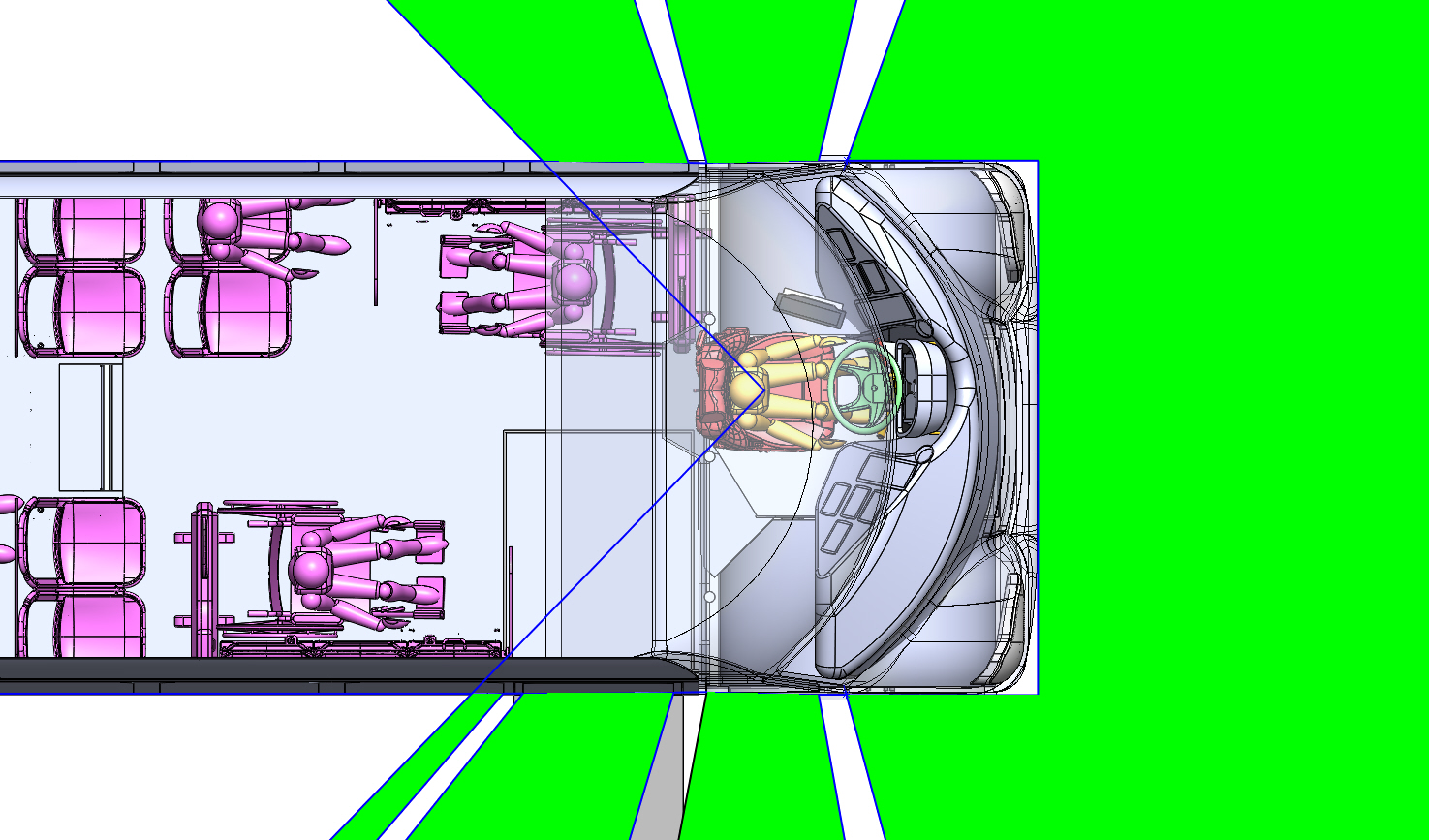
The OneBus next-generation driver compartment delivers the highest degree of direct visibility, situational awareness, and safety in transit today — by design, not as an add-on.
OneBus driver compartment lookaround — 50th percentile male driver, 42" pedestrians at crosswalk 24" from front bumper (APTA standard). Can you find all 13?
Generic 40′ bus driver compartment lookaround — same driver, same pedestrians, same crosswalk distance. Same question: can you find all 13?
The OneBus cockpit makes them visible. The standard 40′ bus cockpit doesn't. That gap is measured in lives, inside and out, and it's why driver visibility is at the center of everything we've designed.
Relocated A-pillars, driver position, and a re-engineered windshield geometry give the OneBus driver a direct sightline of more than 120° — eliminating the blind zones that plague conventional bus designs.
Strategic camera placement provides continuous 360° surround coverage, displayed in the driver's sight line. No mirrors to adjust, no angles to guess — every zone is covered, always.
A positive-pressure isolated cockpit physically separates the driver from the passenger area. Combined with contactless fare collection, drivers are protected without compromising passenger interaction.
Onboard radar provides active pedestrian and object detection. V2V communication enables safe virtual coupling with other OneBus vehicles — adding a layer of automation and intelligence beyond human perception.
Independent front and rear steering gives OneBus drivers precise control in tight urban conditions — pulling cleanly to the curb at bus stops, clearing intersections faster, and getting out of traffic flow when needed. Less conflict, safer stops, smoother operations.
OneBus is designed from the ground up to meet FMVSS, APTA, and SAE standards, among others, governing transit buses and motor vehicles — not retrofitted to comply. Our founders bring firsthand experience from APTA Standards Committee participation, SAE standards development, and multiple prior vehicle homologation programs. Compliance isn't a milestone. It's baked into the architecture.
The OneBus cockpit isn't a modification of an existing bus design — it's a ground-up engineering exercise in what optimal driver awareness looks like when you remove legacy constraints.
The structural A-pillar is repositioned to eliminate the critical forward-left blind zone — the most dangerous area for pedestrian strikes at intersections.
Seating position, steering column angle, and instrument placement are co-optimized so the driver's natural head position maximizes the visible area — without craning or leaning.
Camera positions are engineered at the vehicle architecture stage — not added as afterthoughts. Each covers a defined zone, with overlapping coverage at critical transition points.
Displays, controls, and safety interfaces are arranged to minimize eyes-off-road time and keep all critical information within the driver's primary sightline.
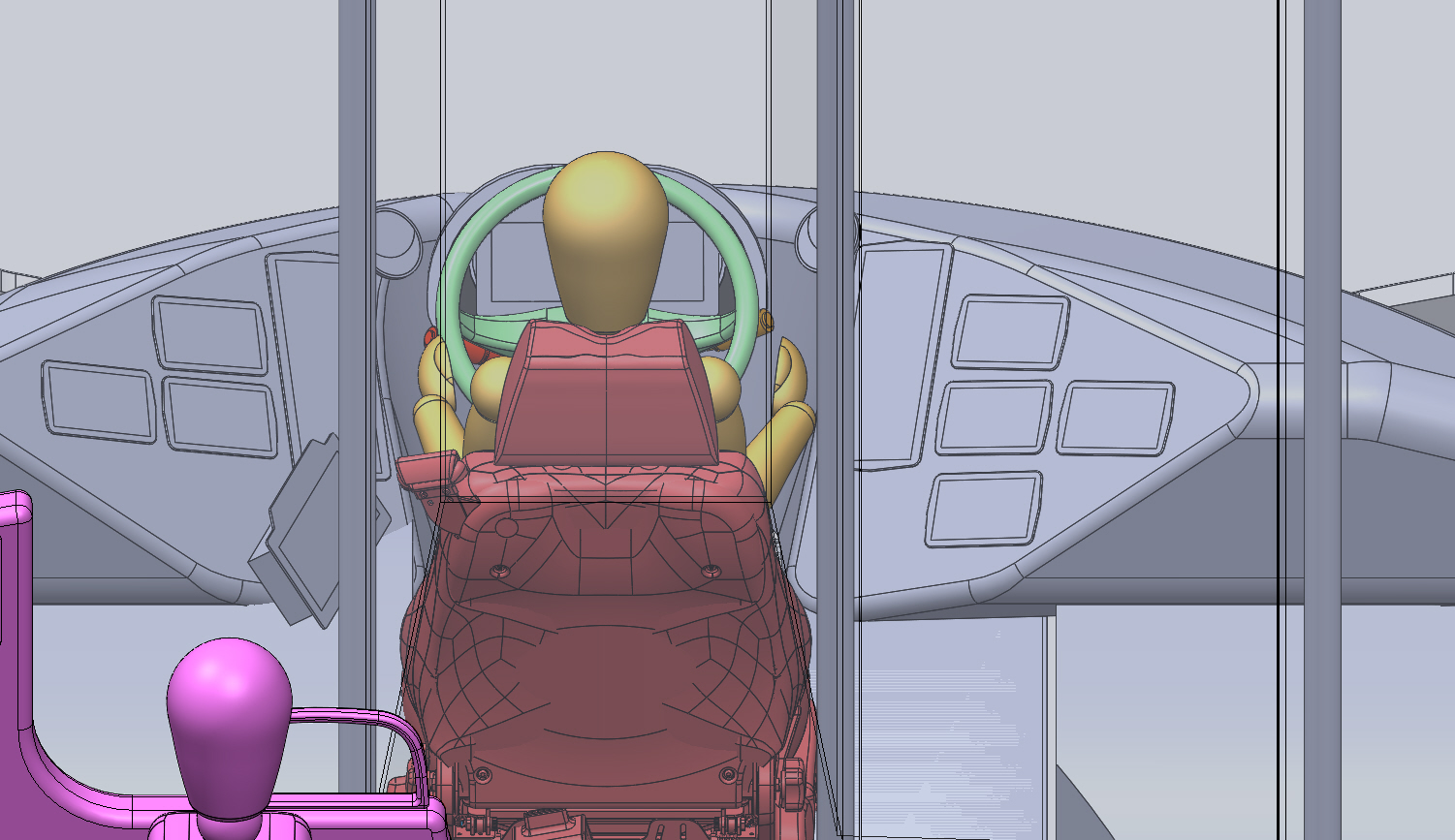
Safety for all - drivers, passengers, and vulnerable road users - is embedded in the three novel systems of the OneBus platform. Explore the complete engineering story.